Refractory Anchor Types
Ceramic Fiber Anchors and Threaded Products
Ceramic fiber linings are widely used in high-temperature equipment to provide lightweight insulation, rapid heat-up, and excellent thermal efficiency. These linings—most commonly installed as blankets, boards, or modules—must be mechanically secured to the steel shell to prevent sagging, shrinkage, or displacement during thermal cycling and vibration. Ceramic fiber anchoring hardware is designed to hold the insulation firmly in place while minimizing heat transfer, accommodating movement, and maintaining long-term lining integrity.
The most common anchoring solution for ceramic fiber blanket linings is the Insul-Twist–style ceramic fiber stud, such as Malco AS267. These studs are stud-welded directly to the steel shell and feature a twisted or ridged profile that positively engages ceramic fiber retention hardware. The geometry of the Insul-Twist design helps resist rotation and loosening, making it highly effective in applications exposed to vibration, repeated thermal cycling, or vertical and overhead orientations. Because of their reliability, ease of installation, and proven field performance, Insul-Twist ceramic fiber studs are widely considered the industry standard for securing blanket linings in heaters, furnaces, ducts, and other high-temperature process equipment.
Threaded studs are used where ceramic fiber or refractory systems require a positive, adjustable mechanical attachment. In ceramic fiber applications, threaded studs are commonly specified for fiber module systems, where retention hardware is tightened onto the stud to clamp and hold the module assembly against the shell. The threaded connection allows precise control of compression and stand-off, which is critical for maintaining module alignment and accommodating thermal movement. Threaded studs are also frequently used in two-component lining systems, such as designs that combine ceramic fiber insulation with a castable refractory hot face. In these cases, the threaded stud serves as a versatile anchoring point that allows multiple materials, layers, and retention components to be mechanically secured to a single attachment, providing flexibility in lining design and long-term durability in demanding service conditions.
Castable Wire Anchors
Monolithic refractories are refractory linings that are installed in place rather than formed into pre-shaped bricks or blocks. They include castables, plastics, ramming mixes, gunnite (shotcrete), and pumpable refractories, and are widely used because of their versatility, installation efficiency, and ability to form seamless linings. Monolithic systems can be engineered for a broad range of service conditions, from lightweight insulating linings to dense, abrasion- and impact-resistant formulations used in severe thermal and mechanical environments.
Castable wire anchors play a critical role in reinforcing these monolithic refractory linings. Once welded to the steel shell, wire anchors become embedded within the refractory mass, providing structural support that helps carry the weight of the lining, control shrinkage cracking, and manage stresses caused by thermal expansion, contraction, vibration, and process-induced movement. Properly designed anchors support the refractory while allowing it to expand and contract independently of the steel shell, which is essential for long-term lining performance.
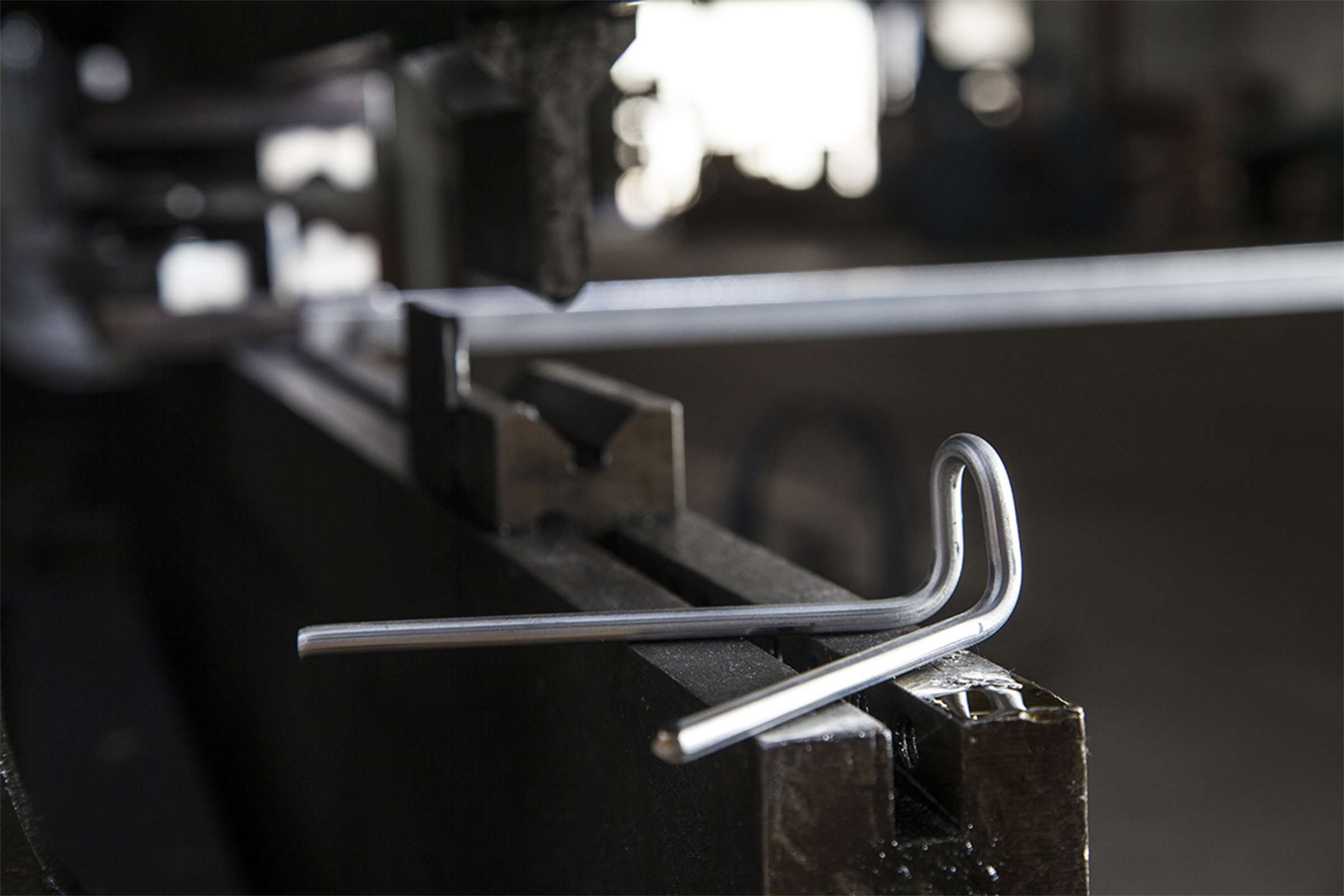
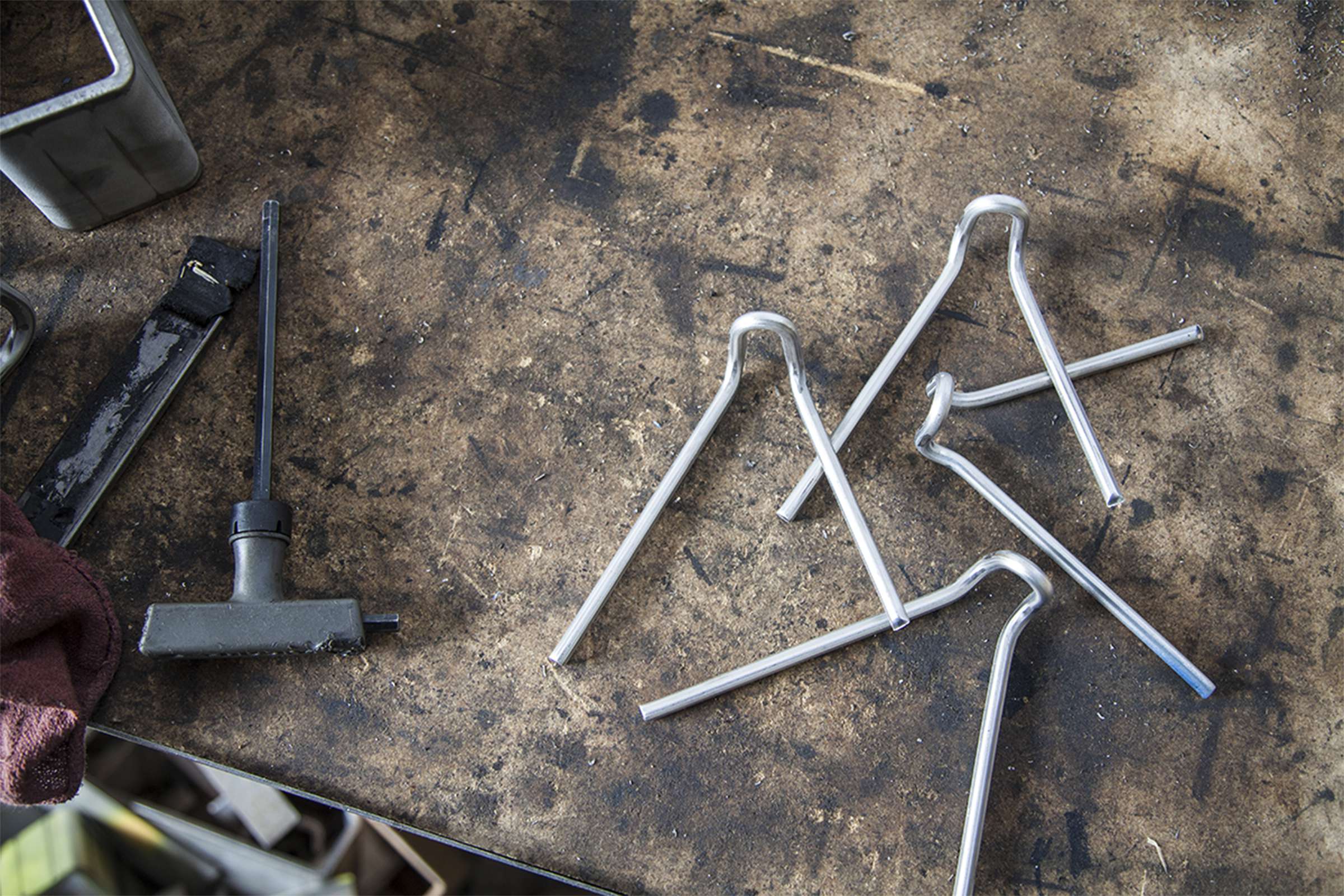
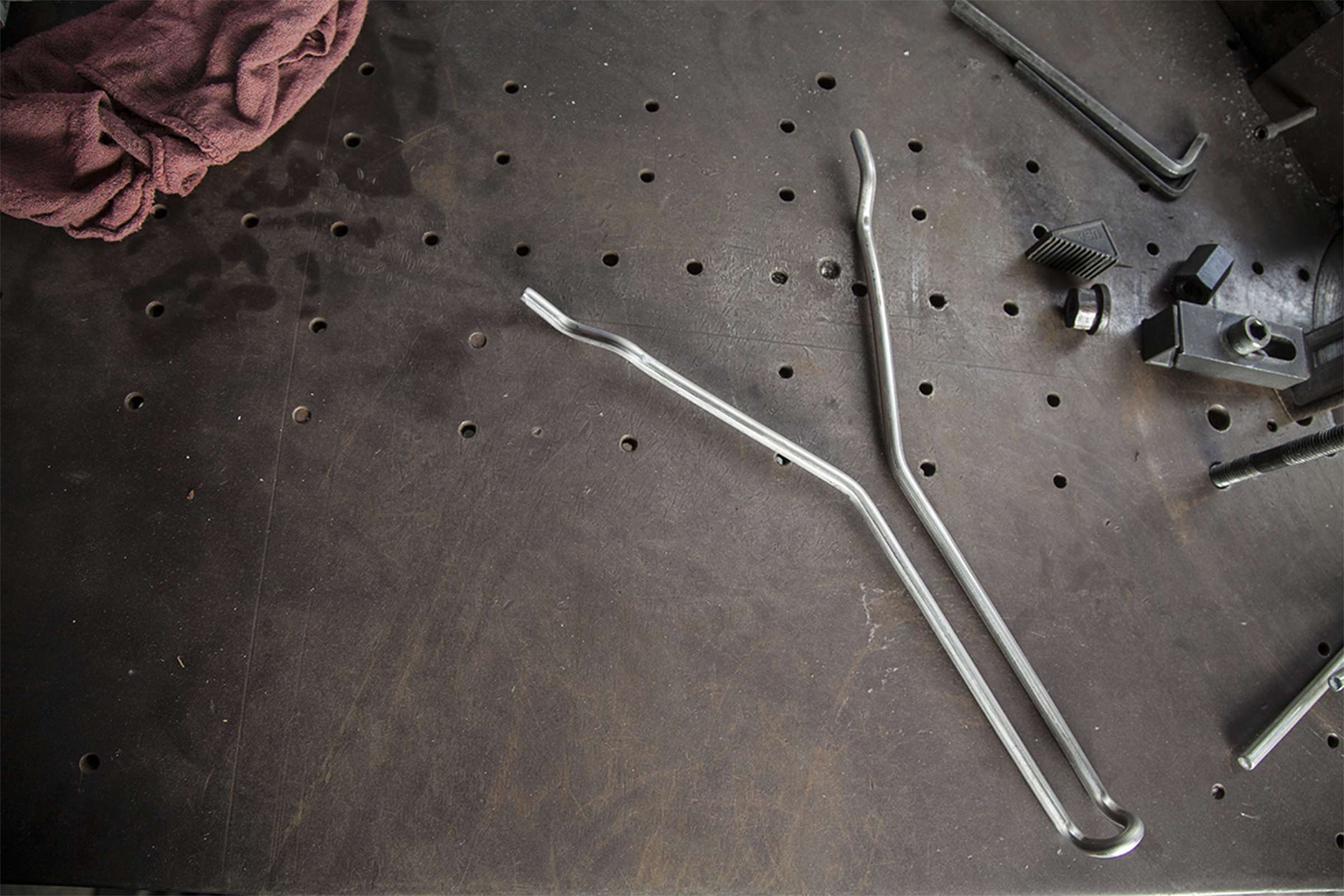
Products range from basic V-anchors and footed wavy V-anchors to specialty designs engineered for specific lining thicknesses, temperatures, and service conditions. The Malco AR740 is the most commonly used castable wire anchor in the industry and serves as a general-purpose solution for a wide range of insulating and dense castable applications.
The industry term “steerhorn” wire anchor refers to the Malco AR731, which features a wide, flared geometry resembling a steer’s horns. This anchor style is specifically suited for thinner monolithic linings, where the broad spread provides effective support across the lining thickness without requiring deeper embedment. Steerhorn anchors are commonly used where lining thickness is limited but uniform support and stability are still required.
Dual-component anchoring systems are also available for applications that require additional reinforcement or a combination of anchoring approaches.
Typical uses include:
- Dense and insulating castable refractories
- Plastic and gunned linings
- Abrasion- and impact-resistant linings
- High-temperature monolithic applications
Wear-Resistant Products
Wear-resistant anchoring products are engineered for applications where refractory linings are exposed to severe abrasion, erosion, impact, and flow-induced wear. In these high-stress environments, conventional anchoring alone is often insufficient to protect the lining. Wear-resistant systems create a robust mechanical framework at or near the hot face of the refractory, helping to resist material loss, stabilize the lining, and significantly extend service life in aggressive operating conditions.
The most widely used wear-resistant product is hexmesh (also commonly referred to as hexmetal or hex), which consists of a hexagonal steel mesh that acts as an armoring layer within the refractory lining. Hexmesh allows the refractory to flow through and encapsulate the mesh, forming a reinforced surface that resists erosion and abrasion while distributing stresses across the lining. Because of its proven performance, hexmesh is the primary reinforcement system used in fluid catalytic cracking units (FCCUs or “cat crackers”), where catalyst particles and high-velocity gas flow create some of the most severe refractory wear conditions encountered in industry.
Hexmesh and related wear-resistant products are used extensively in the petrochemical and refining industries, particularly in cat crackers, cyclones, risers, reactors, and transfer lines. Their ability to withstand continuous particle impingement and thermal cycling has made them the standard solution for refinery and chemical process equipment. Beyond petrochemical applications, these systems are also commonly specified in cement plants, power generation, metallurgical processing, and other industries where erosion and abrasion drive refractory failure.
This category includes a range of wear-resistant anchoring solutions designed to address different geometries and service requirements, including hexmesh, flexmesh, tabs, hex cells, and stud-weldable hex products. Flexmesh provides additional conformability for tight radii or complex shapes, hex cells are used where modular or deeper containment is required, and stud-weldable hex products offer fast, secure attachment directly to the steel shell.
Typical uses include:
- High-erosion and high-abrasion zones
- Abrasive material handling equipment
- Cyclones, risers, cat crackers, and duct transition
- Severe service refractory linings in petrochemical and other process industries
Brick Anchors
Refractory brick linings are used in high-temperature equipment where structural integrity, thermal stability, and resistance to mechanical abuse are critical. Fired refractory bricks provide excellent resistance to heat, chemical attack, abrasion, and impact, making them well suited for furnaces, kilns, heaters, incinerators, and other severe-service applications. Brick linings are typically installed as stacked, keyed, or suspended systems that rely on compressive loading and mechanical anchorage to maintain stability through thermal cycling and long-term operation.
Brick anchors—also commonly referred to as brick retainers, brick clips, brick supports, or brick anchoring systems—are used to mechanically secure refractory brick linings to the steel shell or backup structure while allowing for controlled thermal movement. These anchoring systems prevent brick displacement, separation, or collapse, particularly in vertical walls, suspended sections, and areas subject to vibration or differential expansion. Proper brick anchorage is essential to maintaining lining geometry, transferring loads safely, and extending refractory service life.
Common brick anchoring products include C-clips (also called brick clips or brick retainers), double C-clips, spring-loaded C-clips, tiebacks, and ice tongs. The most commonly used brick anchors are CC-style C-clips, which are designed to engage the brick and tie it back to an anchor point or support member. Standard CC-style C-clips are available in 0.5, 1.0, and 1.5 configurations, where the numerical designation refers to the gap between the refractory brick and the C-clip. This gap is critical for accommodating thermal expansion while maintaining positive mechanical retention of the brick lining.
Spring-loaded C-clips are used where additional flexibility is required to accommodate thermal growth and movement, while double C-clips provide increased stability in higher-load or more demanding applications. Tiebacks are used to transfer brick loads deeper into the anchoring system or shell structure, and ice tongs are commonly used to grip and retain brick courses in suspended or overhead installations. Together, these components form robust refractory brick anchoring and retention systems capable of performing reliably in some of the most demanding industrial environments.
Stud Weldable Products
Stud welding is a fastening process that permanently attaches metal components to a steel substrate by using a controlled electric arc and pressure to fuse the stud to the base material. The process is fast, repeatable, and highly consistent, producing a full cross-section weld in a single operation without the need for drilling, tapping, or back-side access. Because stud welding relies on preset equipment parameters rather than manual welding technique, it delivers reliable results with minimal variability between operators.
Stud weldable refractory anchoring systems leverage this process to create a standardized, efficient method of installing refractory anchors. Stud-weldable wire anchors, stud-weldable hex products, and related accessories are designed with integral weld bases that allow them to be quickly and accurately attached to the steel shell. This approach significantly reduces installation time compared to conventional welding methods and removes much of the operator-dependent skill required for anchor placement. As a result, stud welding enables consistent anchor quality, repeatable spacing, and predictable performance across both shop and field installations.
By minimizing setup time and simplifying installation, stud weldable systems improve productivity while maintaining strong, reliable attachment of refractory anchoring components. These systems are well suited for modern fabrication environments where speed, repeatability, and quality control are critical, as well as field installations where access, schedule, and labor availability can be limiting factors.
Typical uses include:
- Monolithic refractory linings
- Wear-resistant hex systems
- Fabrication shop installations
- Field installations requiring rapid, repeatable anchoring